New Guidance to Increase Diversity Among Shared Lives Carers

Shared Lives Plus, the UK membership charity for Shared Lives care, has launched national guidance to help recruit Shared Lives carers from minoritised ethnic, cultural and religious communities – ensuring the model reflects the diversity of the communities it serves.

Funded by Hallmark Foundation, the Good Practice Guide: Recruiting Shared Lives Carers from Minoritised Ethnic, Cultural and Religious Communities sets out proven, practical strategies to help local schemes recruit and retain carers from underrepresented backgrounds.

Shared Lives is a leading social care innovation where adults who need support are matched with approved carers, sharing their home and community life. When people are supported by carers who share their culture or faith, they often experience more personalised, familiar and culturally sensitive support.

Yet Shared Lives Plus’ State of the Sector report shows that only 5-7% of Shared Lives carers in England are from ethnic minoritised communities, compared with 18% of the population. The new guidance aims to bridge this gap and ensure Shared Lives represents and includes people from all communities.

Case Study: Laura & E – Bury Shared Lives

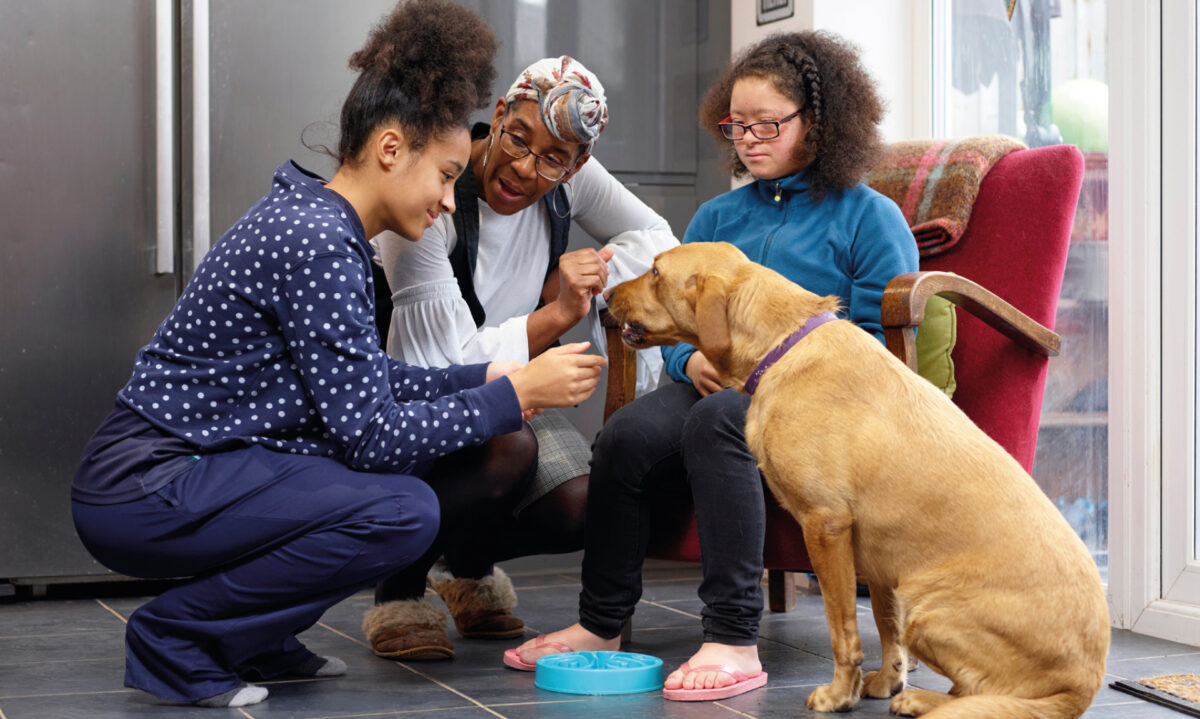
Laura and her husband, from an Orthodox Jewish background, were approved as foster carers in 2002. With six children of their own, they were motivated by the shortage of Orthodox Jewish foster carers and wanted to ensure young people from their community could remain connected to their culture and faith.

Nearly ten years ago, they welcomed a 12-year-old Orthodox Jewish girl with Down’s syndrome. Initially a short-term fostering placement, it became long-term due to her circumstances and the strong attachment she formed with the family.

Sharing the same faith allowed her to continue her religious practices, festivals, and daily routines, helping her settle quickly into family life. Laura explains: “We can support her with her religion as well as her day-to-day needs.”

As she approached adulthood, the family transitioned her to Shared Lives, allowing her to remain in the home where she felt secure. The change was seamless, which was particularly important as she does not always cope well with change. The family have now been Shared Lives carers for over four years.

During the day, she attends college, learning life skills alongside lessons about Jewish festivals and heritage. At home, she participates in Sabbath and festival preparations, attends synagogue with her own illustrated prayer book, and celebrates family occasions. She has also travelled to Israel with the family, visiting holy sites and strengthening her connection to her faith and heritage.

Laura says: “There needs to be a large pool of carers so placements can be well matched. With a good match, you help someone live a life that values what’s important to them and to you. It’s incredibly satisfying to watch someone grow and achieve, knowing you’re making a real difference. The rewards are endless.”

Case Study: Unazia & Mohiz – Ategi Shared Lives, Slough
Unazia, a Pakistani Muslim, and her family have supported Mohiz, a young Pakistani Muslim man, for the past five years, transitioning him from fostering to a Shared Lives arrangement when he turned 18.

“What began as a supportive arrangement has become a deep, family-like bond,” says Unazia. “When Mohiz first joined us, he spoke only a few words and was shy. Now he’s confident, talkative, and independent.”

Mohiz has developed essential life skills, from preparing his own meals to maintaining his room and hygiene independently. The family’s shared cultural and religious background has helped create a supportive, familiar environment. “My husband and kids are very attached to him. They involve him in everyday activities and encourage him to learn new things,” adds Unazia.

Mohiz is also thriving academically and socially, making friends at college and excelling in English and maths.

Ewan King, Chief Executive of Shared Lives Plus, said: “If Shared Lives is to be part of every community, our carers need to reflect the diversity of local communities. There is more to do to ensure that Shared Lives carers come from a wide range of backgrounds, including minoritised ethnic, cultural and religious communities. What is pleasing, is that there is much good work going on to address this challenge. This guide brings together many of these examples of good practice, and we would like to take the opportunity to thank all those who contributed. Keep up the amazing work, and for those who want to make further progress, please do use this guide.”

Based on research and engagement with Shared Lives schemes across England, the guide highlights how to:

  • Recruit through faith groups, local leaders and community networks
  • Use inclusive language and relatable imagery in marketing
  • Support carers through culturally competent staff and flexible training
  • Recruit carers to support people with dementia, drawing on learning from the Live More programme – a model of early action Shared Lives day support for people living with dementia and their families.

Stephen Burke, Director of the Hallmark Foundation, said: “This guide is vital to the future growth and success of Shared Lives. Recruiting more Shared Lives carers from communities currently underrepresented will enhance people’s experiences and lives. The continued expansion of Shared Lives will give a wider range of adults, particularly older people, the support they want and need for better lives.”

A range of national organisations – including the Local Government Association (LGA), Association of Directors of Adult Social Services (ADASS), NHS Confederation and the Department of Health and Social Care (DHSC) – are backing the growth of Shared Lives.

In October, the King’s Fund described Shared Lives as a leading example of good practice that could help solve many of the challenges facing social care: “For some, the way social care services are commissioned and provided needs to change more fundamentally. Typically, this involves a move away from institutionalised, professionalised care towards much broader forms of support, exemplified by services such as the Shared Lives scheme and other strength or asset-based approaches.”

Download the Good Practice Guide: Recruiting Shared Lives Carers from Minority Ethnic, Cultural and Faith Communities at: www.sharedlivesplus.org.uk/our-work/resources/recruiting-diverse-shared-lives-carers

Care Sector Fundraising Ball reaches new heights in 2025

More than 600 people from across the care sector gathered together for an evening of fundraising, entertainment and dining – putting the fun into fundraising for three great social care charities: Care Workers Charity, Marie Curie and Care Rights UK.

The Ball was the sixth annual fundraising event organised by Championing Social Care, raising over £1.7 million for charities. It has grown in size with this year’s Ball at London’s Grosvenor House the biggest yet, packed with music, magic, laughter and fine food.

See more: Care Sector Fundraising Ball • Championing Social Care  

Introducing the UK Better Lives Index

Spatial inequalities in health, wealth and opportunity across the UK are stark and persistent. A child’s life chances can vary dramatically depending on where they are born, with lasting impacts into adulthood and older age.

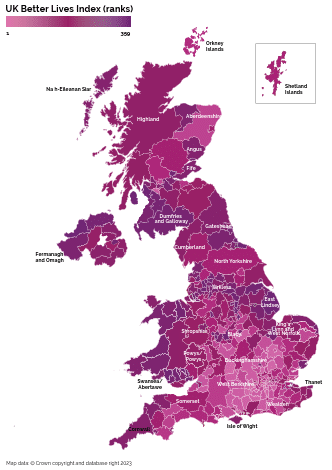
The ILC’s new UK Better Lives Index, supported by the Hallmark Foundation, brings together robust, UK-wide data to show the best and worst places to be born, grow up and grow old. It reveals how place continues to shape health, opportunity and ageing – and where change is most urgently needed.

In advance of launching the interactive online tool, the ILC has published initial findings and a short working paper summarising its approach to constructing the Index and showing how the findings relate to key policy priorities including: supply side growth and older workers, the Industrial Strategy and the NHS 10-Year Health Plan.

Key findings

Place shapes destiny

  • Child poverty averages 12% in the top-ranked areas but 29% in the lowest – and over 40% in Oldham, Pendle and Bradford.
  • Life expectancy at birth is nine years longer in Richmond upon Thames (85 years) than in Blackpool (76 years).

Unequal access to opportunity

  • Households in the top 20% of areas have £10,000 more disposable income on average than those in the bottom 20%.
  • Economic activity among over-16s is 11 percentage points higher in better-ranking places.
  • House prices are more affordable in lower-ranked areas, but this often reflects stagnation rather than prosperity.

Inequalities in older age

  • Economic inactivity among 50–64-year-olds averages 34.5% in the lowest-ranked areas – 13 points higher than in the top areas.
  • Life expectancy at 65 is over two years longer in top-performing places (21 years vs 18.8). In Glasgow it is just 17 years.
  • Avoidable mortality is almost twice as high in the bottom fifth of areas compared to the top.
  • Pensioner poverty varies widely, with 39% of over-65s in Tower Hamlets claiming pension credit compared to just 4% in Hart.

Unlocking untapped economic potential

  • Economic inactivity among older workers varies sharply, even between similar places, suggesting major growth potential.
  • If all areas matched the best in their peer group, output from 50–64-year-olds could rise by 19% (£109bn).
  • Even a modest scenario – where places meet the average of their peers – would boost output by 3% (£19bn).
  • The largest proportional gains would be in struggling areas like Ashfield (+46%) and Burnley (+37%).

Towards an inclusive industrial strategy

  • High-ranking areas are more likely to host frontier sectors such as digital and clean energy. In top areas, digital jobs make up 9.4% of employment, compared to 3.7% in the bottom fifth.
  • Many lower-ranked areas are rooted in foundational industries such as steel, construction and logistics. These are vital but often overlooked in national policy.
  • Without intentional design, the UK’s industrial strategy risks widening inequalities by reinforcing existing strengths. Growth must work for all people and places.

A UK-wide vision for health

  • Between 2016 and 2021, over 550,000 excess deaths were linked to geographic inequality.
  • England’s planned rollout of health hubs in deprived areas is welcome, but the Index shows Scotland, Wales and Northern Ireland face similar challenges. A pan-UK health and ageing strategy is essential.

The promise of potential

The UK Better Lives Index is not just a diagnosis – it is a roadmap for action. It shows where inequality is entrenched, but also where strengths can be built on. With the right investment and attention, every community has the potential to support longer, better lives.

See the report: ILC-UK-Better-Lives-Index.pdf

‘Thriving in 2025’ – how Hallmark Foundation is promoting ageing well and improving care

The Hallmark Foundation has published its 2024-25 impact report demonstrating how it is making a big difference on its key priorities: ageing well and improving care.


In the last year the foundation has supported major research by My Home Life England at City University of London which reports older people’s views on residential care homes they live in. And it has supported the development of the Global Healthy Ageing Index ranking 153 countries on how good they are to grow old in – with a similar UK Index to be published later this year.


We have also supported the creation of the London Loo Alliance; the Live Well Together intergenerational public health toolkit; Who Cares Wins! care careers conference for school and college students; and Championing Social Care amongst other initiatives.


These are just some of the projects featured in the impact report that the foundation has supported over the last year. With relatively limited resources, the foundation works closely with its fundees to build partnerships, attract other funding and promote outcomes.


The impact report also looks forward to new projects that the foundation will be funding in 2025-26 to create a Britain where everyone can age well, every step of the way.


Download ‘Thriving in 2025’, the latest Hallmark Foundation impact report.

Free conference highlights how research can enhance residential care for older people

The Hallmark Foundation is hosting a free online conference the Hallmark Foundation with Hallmark Luxury Care Homes on Tuesday 13 May to highlight the impact that research projects can have on enhancing residential care for older people, their families and carers.

A wide range of practical and policy influencing research projects will be showcased. The event is aimed at care home managers and teams, executives and leaders, commissioners, researchers and academics, older people and their families and carers – anyone who wants to help develop better residential care for older people.

To watch a recording of the Enhancing Residential Care conference, please click the link below.

The Enhancing Residential Care conference promises to be a stimulating and challenging learning opportunity.